
architecture of the future
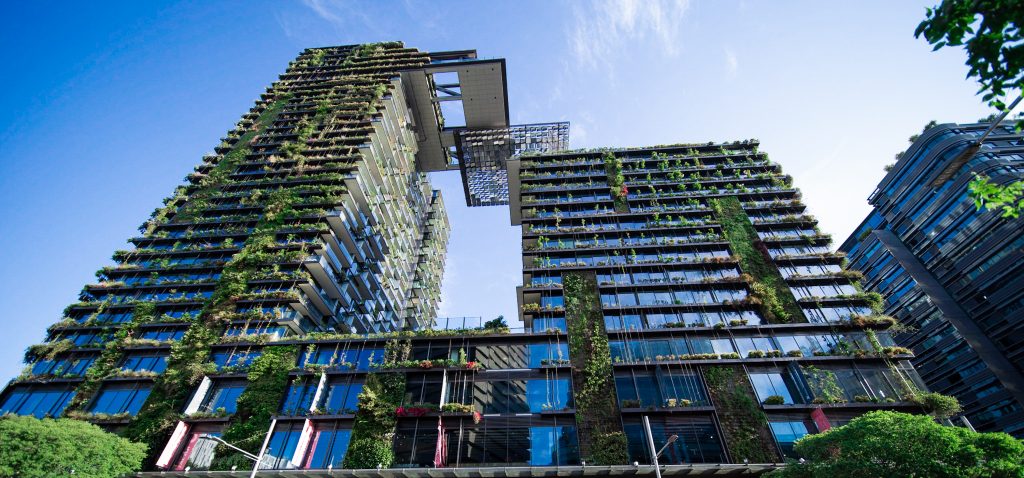
On a reverse path, how the future envisions architecture, when it comes to sustainability, design, internet of things, quality of life and, Sure, the architecture itself? The enhancement of well-being, making environments more comfortable and harmonious are themes that should be on the agenda of architects, engineers and companies when designing and building, mainly due to the direct influence on productivity within a corporate environment.
Dewi Pinatih, Senior Product Design Editor at British market intelligence firm Stylus, brought light to this issue.
The agenda for the time is… the future!
Studies about the near future are increasingly used by brands and professionals from different areas, because they allow to follow, among other movements, behavioral changes in society, and this has a direct impact on consumption. And architecture is no different., as conta Dewi Pinatih, da Stylus. “Architecture reflects how we live today. That's why it's extremely important to understand trends in consumer lifestyles for the near and distant future – it's how we ensure that architecture will meet the needs of future consumers.. We need to make sure that nothing we build today will be ‘useless’ tomorrow.”.
Sustainability, technology and artificial intelligence
Dewi points out that, how our work lives changed quickly – and in many cases, radically – under the influence of the pandemic, there was a collective perception that houses, offices and public spaces needed to adapt. This happened from one hour to another, but if we look at other issues, not only space, but for the environment, for example, here too the architecture will need adjustments. “The fight against climate change will also have a great influence on architecture, both in the materials we use in construction, as in how buildings will become self-sufficient”. This ‘self-sufficiency’ will be backed by technology that “is making our buildings smarter and helping humans to be more sustainable.”. For example, sensors can monitor which spaces are in use and turn off the air conditioning, lighting or heating in unused parts of the building. Technology is also helping architects access recycled building materials and calculate how to reduce emissions in the building process.”, scores Dewi.
Such technology is already much closer and more accessible to professionals than one imagines.. There are tools on the market based on artificial intelligence that help architects, engineers and real estate professionals to develop more sustainable cities. Through them, it is possible to evaluate and test design solutions with greater agility, allowing them to find better solutions for each project., because they operate through clouds and use Artificial Intelligence technologies. That, in its turn, helps evaluate terrain data, maps, conditions of ventilation and natural lighting, vehicle traffic and zoning, helping to make better decisions during the early design phases. It is technology as an ally of the environment.
The Jetsons – Here and Now
Maybe a thin line separates us from the Jetsons, but just for visual purposes, why, the Goddesses, we already live in smart cities. The difference is the look we saw in the cartoons of the 1960s. 1980. "Somehow, smart cities are already present all around us, but they don't look as futuristic as the Jetsons. Automotive brands are already testing their self-driving cars, who can read the environment (urban) around you with the help of sensors. Sensors on public transport tell us where to find an empty seat on a busy train, and supermarkets that don't use cash already allow us to shop without having to stop to pay at the checkout. Connected services will accelerate in the coming years as 5G becomes more integrated. Therefore, that future is very present – the trick is not to alienate people, but communicating how consumers can benefit”, concludes.
Connections
Philosopher Alain de Botton brings philosophy closer to contemporary life in his book “Arquitetura da Felicidade” – Editora Rocco, 2007 – e, at a certain point in the book, Alain describes home as any place with which the individual identifies and not necessarily where he lives.. “To speak of home in relation to a building is simply to recognize its harmony with our own inner song.. Home can be an airport or a library, a roadside garden or food trailer.” Dewi believes that, with the trend of hybrid living, people should also have more casual interactions and believe in transforming neighborhoods. “People will work in an office part-time and work from home the rest of the time.. This will influence the architecture of the house, who will need to support work and studies, as well as leisure activities. They will also look for casual interactions with neighbors. (since they are not seeing co-workers) and need access to green areas, outdoors. We see a greater focus on local neighborhoods that meet almost all of our daily needs and the emergence of the ‘city of 15 minutes', I work, home, recreation, culture and shopping are within walking distance or accessible by bicycle”.
Changes
Bringing into the picture the next generations who will take “command” of the world economy – today 51% is already in the hands of the generation that has between 24 e 39 years (millennials are at the top of the planet's economic pyramid, adding 1,8 billion people — nearly a third of the population. Source: Pew Research)* – the issue of sustainability is one of the highlights when looking to the future. About this, Dewi leaves an important consideration: “a lot is already changing and this area is highly regulated, guided by international agreements such as the Paris Agreement. In Holland, for example, planning permission is only granted to projects that comply with regulations on the environmental impact of materials used in new construction. This enhances the use of recycled materials (acquired in urban mining projects), because they can reduce the value of the work per square meter”.
Anyway, the future is now.
The gallery was not found!
*https://veja.abril.com.br/brasil/como-a-geracao-dos-millennials-pensa-consome-e-molda-o-mundo/
Check out these and other stories on our Connectarch content platform. visit: www.connectarch.com.br
 Back
Back